
-
 July 11, 2026
-
0 Comments
-
By
satyaitsolution


 By
By TRAI 1600 vs 140 Number Series: Everything You Need to Know About India’s New Calling Regulations
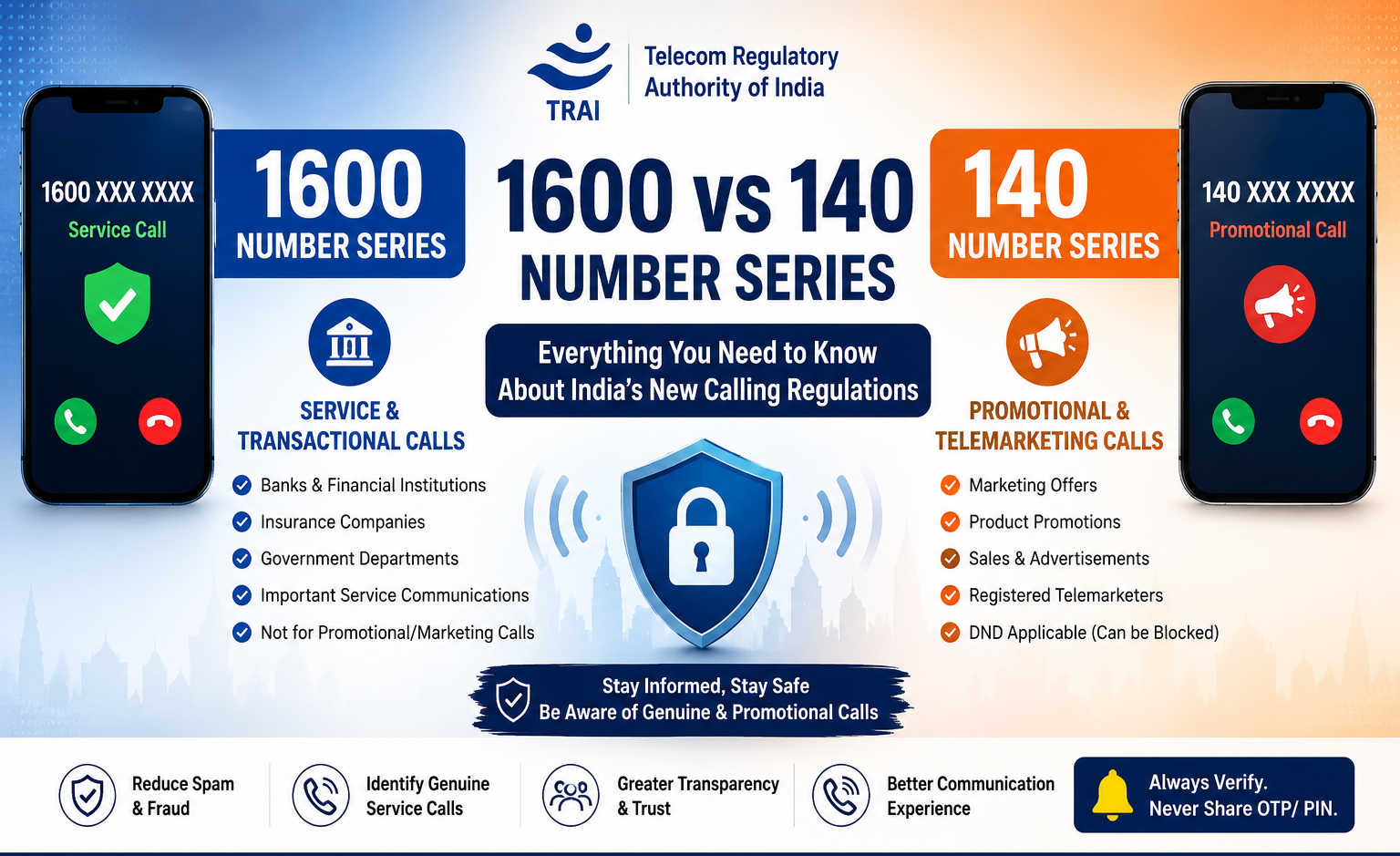
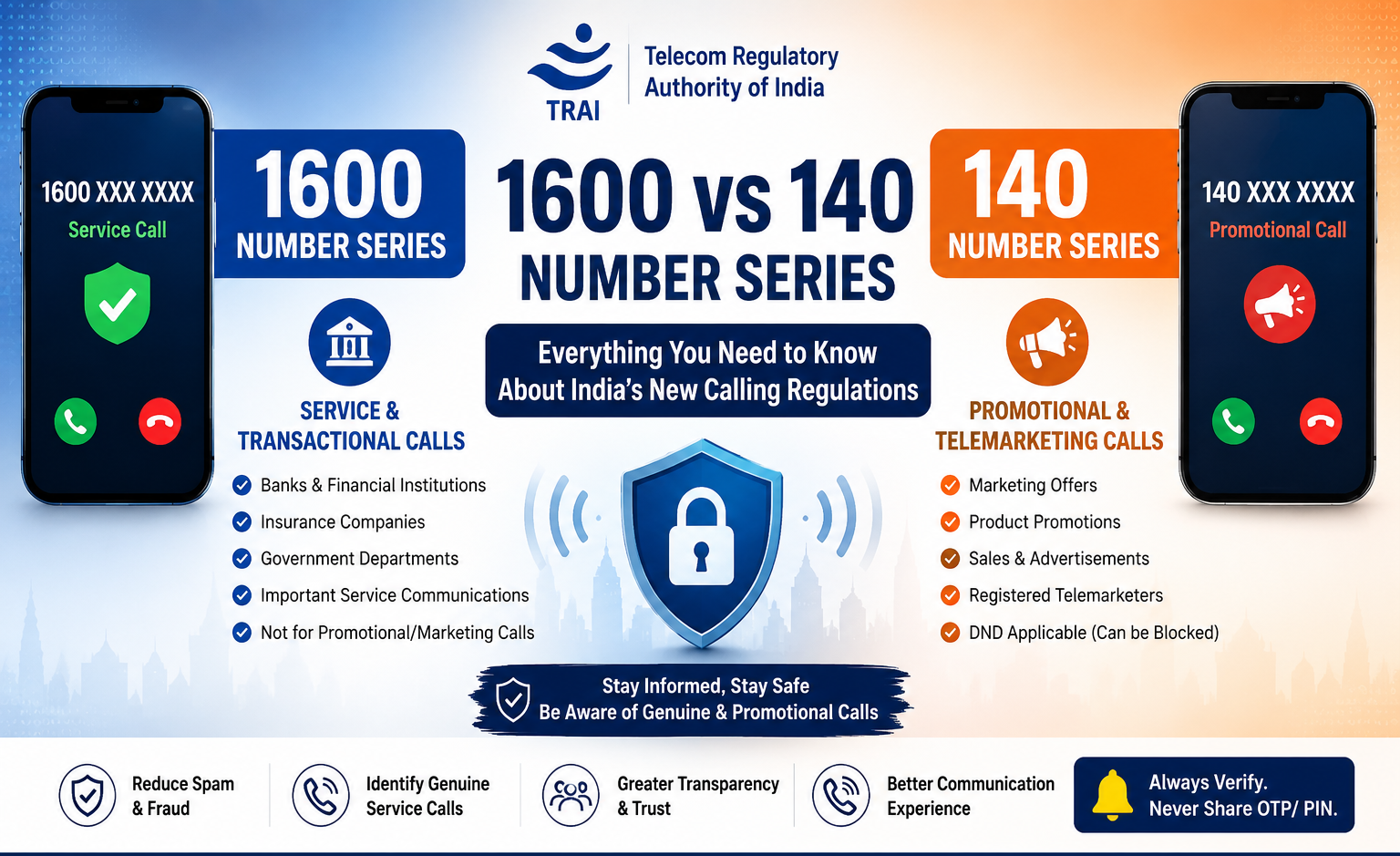
TRAI 1600 vs 140 Number Series
Introduction
The Telecom Regulatory Authority of India (TRAI) has introduced important clarifications regarding the 1600 and 140 number series to improve transparency, reduce fraud, and help consumers identify legitimate phone calls. Understanding the difference between these two number series can help you recognize genuine calls and better manage unwanted communications.
What is the 1600 Number Series?
The 1600 number series is reserved for service and transactional voice calls made by regulated entities. These calls are generally important and are not meant for advertising or sales.
Organizations that may use 1600 numbers:
- Banks and Financial Institutions
- Insurance Companies
- Government Departments
- Regulated Business Organizations
- Other authorized service providers
Purpose of 1600 Numbers
- Banking transaction alerts
- Customer service communications
- Insurance policy updates
- Government notifications
- Service confirmations
- Account-related information
Key Features
- Reserved for legitimate service-related communication.
- Helps users identify genuine calls.
- Intended to reduce phone scams and impersonation fraud.
- Calls from the 1600 series should not be tagged or filtered as spam by telecom operators or caller ID applications.
Image Box Title
Change this description
What is the 140 Number Series?
The 140 number series is designated for promotional and telemarketing calls made by registered businesses.
Examples of 140 Calls
- Marketing offers
- Product promotions
- Sales campaigns
- Loan offers
- Credit card promotions
- Real estate advertisements
- Shopping and e-commerce offers
Key Features
- Used only by registered telemarketers.
- Promotional calls respect customer communication preferences.
- Users who register for Do Not Disturb (DND) can stop receiving most promotional calls from this series.
Difference Between 1600 and 140 Number Series
| Feature | 1600 Series | 140 Series |
|---|---|---|
| Purpose | Service & Transactional Calls | Promotional & Marketing Calls |
| Used By | Banks, Government, Insurance, Regulated Entities | Registered Telemarketers |
| Call Type | Important Service Communication | Advertisement & Sales |
| DND Applicable | No | Yes |
| Examples | OTP confirmation, account updates, policy information | Loan offers, product promotions, discount campaigns |
TRAI’s Latest Clarification
TRAI has clarified that:
- 1600 series numbers should not be tagged, blocked, or filtered as spam because they are reserved for legitimate service communications.
- 140 series numbers are used for promotional calls. Customers can reduce these through the Do Not Disturb (DND) service, but telecom providers and apps should not arbitrarily tag or filter these designated number ranges outside the regulatory framework.
Safety Tips for Mobile Users
- Always verify the identity of callers claiming to represent banks or government agencies.
- Never share your OTP, UPI PIN, passwords, CVV, or internet banking credentials over the phone.
- Be cautious even if a caller appears to use an official number.
- Report suspicious calls to the appropriate authorities or your telecom operator.
Conclusion
The introduction of the 1600 number series and the continued regulation of the 140 number series are significant steps toward making India’s telecom ecosystem safer and more transparent. While 1600 numbers are meant for genuine service-related communication, 140 numbers are reserved for promotional calls. Knowing the difference helps consumers make informed decisions and stay protected from fraud while ensuring they do not miss important communications.
Published by Satya IT Solution